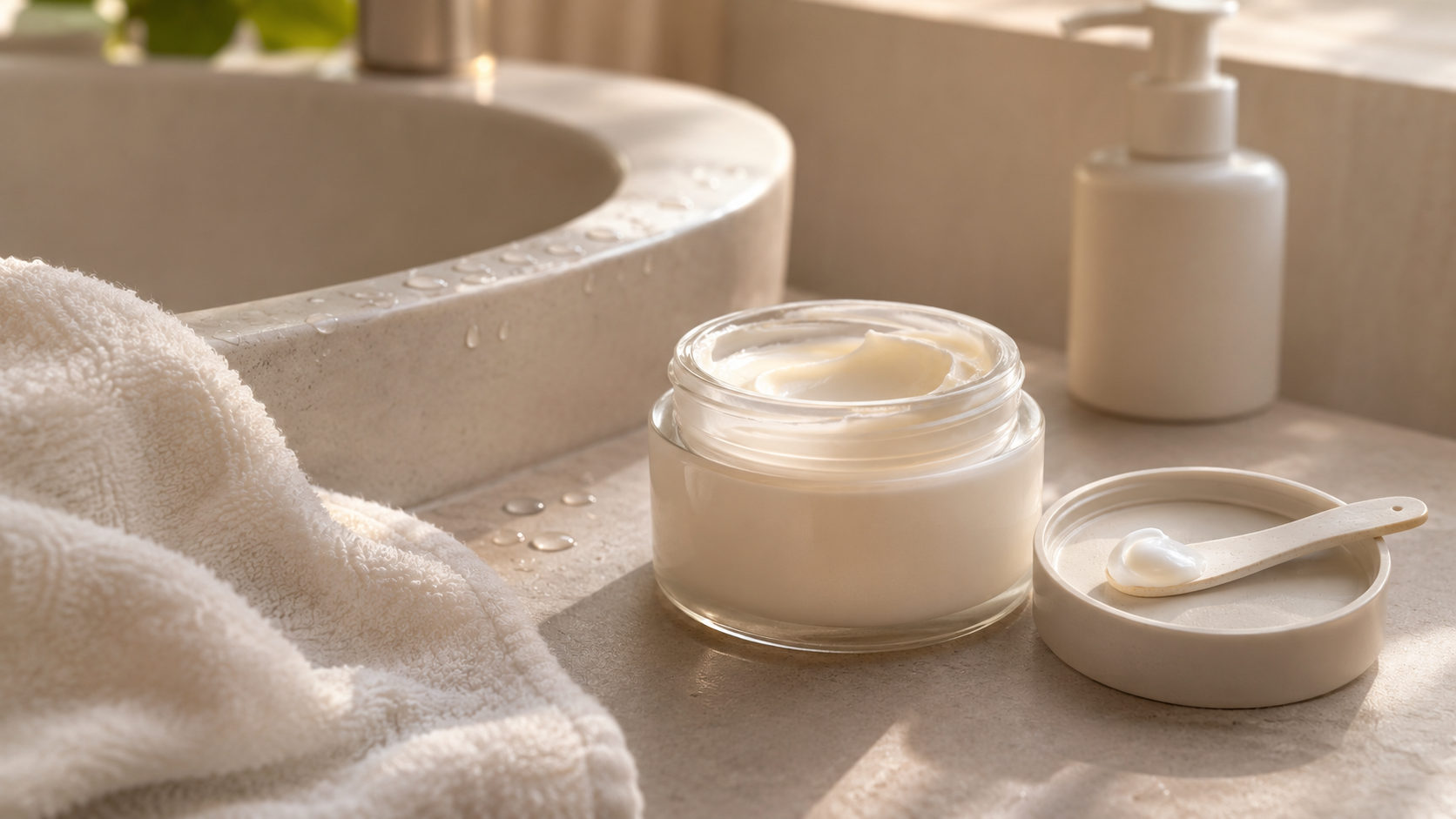
Your face feels fine before washing. Five minutes later it feels tight, and your usual products may sting. Before adding a serum or a richer cream, look at the step that changed how your skin feels. Water temperature, cleansing habits and the products you apply afterward give you practical places to start.
What does the skin barrier do?
The stratum corneum is the outermost layer of the skin. It helps slow water loss and limits what reaches the layers below. When skin feels dry, tight or uncomfortable, a simpler routine may make it easier to see which steps you tolerate well. That sensation alone can have several causes. Persistent burning, cracks, a rash or symptoms that fail to improve warrant a dermatologist’s assessment. [1] [3]
Try a simpler routine before adding more products
Start with a gentle cleanser where needed, lukewarm water and a moisturizer that suits your skin. If cleansing leaves you tight, look at the amount you use, how long you massage it in and whether you are scrubbing. After washing, pat your skin gently and apply moisturizer while it is still slightly damp. Keep sun protection as part of your daytime routine. [1]
Temporarily set aside optional scrubs or exfoliants that sting. Keep track of your usual products and change one optional step at a time. For example, if you swap your cleanser and moisturizer on the same day, it will be harder to tell which made the difference. If you are using prescription skincare, ask the prescriber about adjustments.
How to choose a moisturizer you’ll keep using
| What you notice | What to look for | What to check after application |
|---|---|---|
| Tightness soon after cleansing | A gentle cleanser and a fragrance-free moisturizer | How your skin feels a few minutes after rinsing |
| Dry areas that stay rough | A cream or ointment on the areas that need it | Whether the finish is comfortable for the time of day |
| Heavy feel under daytime products | A lighter texture you can spread evenly | How it layers under your usual sunscreen |
Glycerin is a humectant that helps retain water. Petrolatum is an occlusive that helps reduce water loss. A controlled study found complementary effects from the two within one tested cream. A separate study of a particular cream containing ceramides, triglycerides and cholesterol found changes in measured barrier properties. Those results belong to the tested products and conditions. Use ingredient lists to shortlist options, then judge the finished moisturizer by comfort and how it fits your routine. [2] [3]
If scent tends to bother you, read the label for “fragrance-free.” A product described as “unscented” can contain ingredients that mask odor. [1]
What a brand should ask when sampling a barrier-focused cream
Define the use moment before choosing a hero ingredient. A daytime facial cream that layers under sunscreen and a richer evening cream for very dry-feeling areas have different finish targets. Record spread, absorption, tackiness, residue and compatibility with the intended pump or jar. Compare samples with the same dose and evaluation timing.
Separate what the panel can feel from what a claim requires. A panel can describe softness or a less tight feeling. If you plan to claim a measured effect on hydration or water loss, discuss the finished-product test and evidence early. Check the wording against the destination market’s rules before approving artwork. [4]
Common questions
Is a thicker cream always better?
Creams and ointments can be useful for very dry areas. If a heavy finish keeps you from using the product consistently, a lighter formula that feels comfortable can be a more practical choice for daytime use. [1]
Do I need a separate barrier serum?
If a gentle cleanser, moisturizer and daytime sun protection meet your needs, begin there. Consider another step when you can describe the specific benefit you want and how it fits alongside your other products.