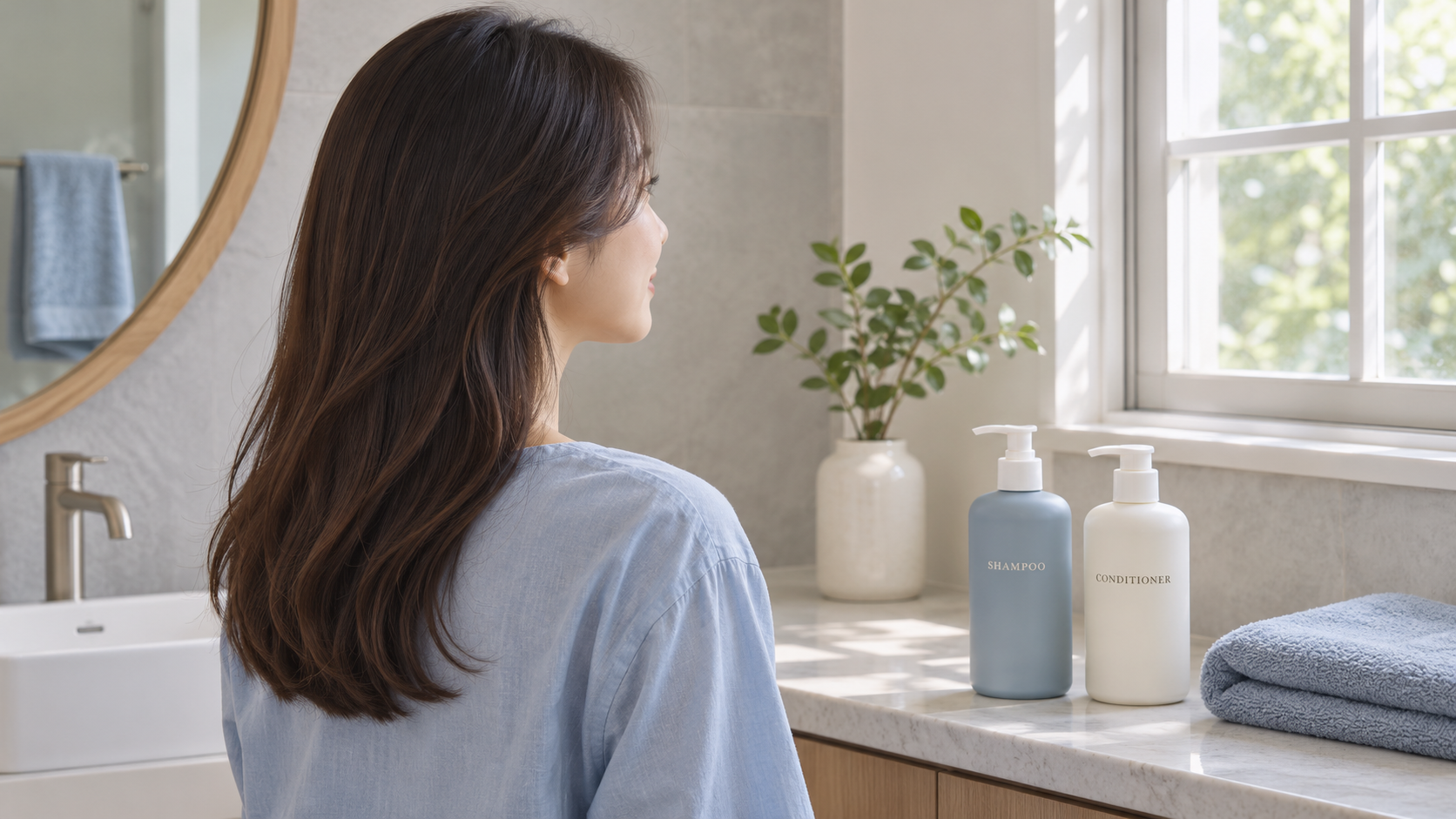
Your roots look greasy by the next morning, yet your ends tangle after every wash. Choosing a stronger shampoo for both can make the lengths harder to manage. Begin by giving each part of your routine a job. Shampoo addresses the scalp and roots. Conditioner can focus on the parts of the hair that need slip and softness.
Regular shampoo and clarifying shampoo serve different occasions
A regular shampoo is the one you reach for when oil, sweat or daily residue builds up between washes. A clarifying shampoo is typically positioned for a more thorough cleanse when heavier styling products leave a coated feeling. The word “clarifying” alone tells you little about how the formula will feel on bleached ends or a sensitive scalp. Look at directions, suitability for your hair and how your hair feels after rinsing and drying.
If your hair feels coated even after washing, first check that you are rinsing thoroughly. Consider whether you recently added dry shampoo, wax or a heavier leave-in product. Change one variable and notice whether the coated feeling improves. Greasy roots alone can simply mean you need to wash sooner with a shampoo you already tolerate. [1]
| What you notice | A first adjustment | What to observe next |
|---|---|---|
| Roots become oily quickly and ends feel dry | Shampoo the scalp and condition the ends | Root freshness and ease of detangling |
| Hair feels coated after several styling days | Check rinsing and consider a clarifying wash as directed | Coated feel after drying and comfort at the ends |
| Ends feel rough after bleaching or heat styling | Give the lengths more conditioning and limit extra cleansing there | Wet combing and dry feel |
| Flakes keep returning with itch or redness | Ask a dermatologist about the cause | Whether you need targeted care |
How often should you wash?
The American Academy of Dermatology suggests washing according to how quickly the scalp and hair get oily or dirty. A person with straight hair and a very oily scalp may need to wash more often than someone with dry, curly or textured hair. Apply shampoo mainly to the scalp and condition the hair afterward. With fine or straight hair, conditioner can concentrate on the ends. [1]
One study of wash frequency reported improved outcomes with more frequent shampooing under its study conditions. Participants and products were specific to the research. Use it as context for adjusting your routine and pay attention to your scalp comfort and the condition of your lengths. [2]
When should you reach for a clarifying shampoo?
Treat it as an option for an identifiable buildup problem. Follow the product’s directions, particularly if your hair is color-treated or chemically processed. After trying it, assess your hair once it is dry. Check whether the roots feel cleaner and whether the ends are still easy to comb. A strong foam or a squeaky finish can tell you how a wash feels. Your dried hair gives you a better basis for deciding if that wash fits your routine.
What brands should ask for in a shampoo sample
Brief the regular shampoo and clarifying product separately. Define hair types, expected wash frequency, styling habits and the intended post-rinse finish. Compare prototypes with a fixed amount of shampoo and a consistent washing method. Score spread at the roots, rinse time, wet combing and dry feel. For a shampoo-and-conditioner pair, also evaluate how the two work together.
If you want an anti-dandruff positioning, confirm product classification and claims before naming or packaging. The FDA treats anti-dandruff shampoo in the U.S. as both a drug and a cosmetic because of its intended uses. [3]
Common questions
Do I need a clarifying shampoo every week?
The right occasion depends on product directions, your styling habits and how your hair responds. Start with the reason you want a deeper wash and reassess after using it.
Should I apply conditioner to an oily scalp?
If your roots get oily and your ends need softness, try concentrating conditioner on the ends. Apply the amount and follow the placement indicated for the product and your hair type. [1]
Sources
Take the next step for your brand
Explore hair care manufacturing · Discuss your hair care brief